
BMW K100 vs K75 for a custom build: which should you choose?

BMW K100 vs K75 for a Custom Build: Which Do You Choose?
You're standing in your garage and you've just found two possibilities for your dream custom project: a BMW K100 or a K75. Both are classic, reliable machines with tremendous potential for a truly personal build. But which of these two K-series engines fits better with your vision?
This isn't just a theoretical question. The choice between the BMW K100 and K75 literally determines the direction of your entire project. We're going to break down both machines completely, so you can make an informed decision.
The Basics: Engine and Power
The most obvious question first: what are the differences under the hood?
The BMW K100 features a water-cooled, four-cylinder boxer engine with 987cc and delivers approximately 90 hp. This isn't raw power, but it's a solid, reliable engine that feels like a trusted companion on long rides. Maximum torque is reached at around 6000 rpm, which means you don't have to constantly rev it hard.
The BMW K75, on the other hand, has a three-cylinder with 747cc and roughly 75 hp. It sounds like less power, and it is, but there's something magical about that three-cylinder. It feels more direct, more playful even. You hit peak torque sooner and the engine feels like one with your actions.
For a custom build, this difference actually matters less than you might think. Both engines are old enough that you won't extract enormous extra power without serious intervention. And let's be honest: tuning from 75 hp to 85 hp doesn't feel like a transformation. You're not building these bikes for drag racing.
What does matter: both engines run as reliably as clockwork. They're already 30, 40 years old and if they're running now, they'll keep going for a few more years.
Chassis and Dimensions
Now it gets more interesting for your custom build.
The K100 is longer and feels bigger. The wheelbase is about 1575mm and total weight hovers around 215 kg. This gives you more stability at speed, but makes tight turning maneuvers trickier. For a café racer build you usually want short and nimble.
The K75 is more compact. With a wheelbase of about 1520mm and weight of roughly 200 kg, the machine feels much more agile. This isn't just psychological—it's genuinely noticeable in how the bike responds in the curves.
For your custom project: if you want to build something that truly feels like a café racer, the K75 feels more honest. You can certainly make the K100 into a beautiful custom, but you'll need to work harder to disguise that stretched chassis.
The Frame: A Crucial Difference
This is where it gets interesting.
Both bikes have a two-spoke aluminum frame. Great for the original designers, but tricky for customizers. The frame isn't exactly designed for creative modifications.
However: the K75 frame is actually slightly more flexible if you want to modify it. The more compact design means you have more room to get creative with your suspension and seat height. The K100 is more rigid, yes, but that also makes it stiffer for modifications.
If you're planning a serious custom build—not just a paint job and new bars, but something that truly feels different—the K75 gives you more freedom to work.
BMW K100 vs K75 Custom Build: Power, Weight and Handling at a Glance
| Aspect | K100 | K75 |
|---|---|---|
| Displacement | 987cc | 747cc |
| Power | ~90 hp | ~75 hp |
| Max Torque | ~90 Nm | ~74 Nm |
| Total Weight | ~215 kg | ~200 kg |
| Wheelbase | 1575mm | 1520mm |
| Tank Capacity | 16 liters | 16 liters |
| Engine Type | Four-cylinder | Three-cylinder |
| Custom Preference | Elegant, long | Agile, compact |
Electronics and Modern Upgrade Possibilities
This is where you can build modern technology into your classic bike, and it makes more difference than you'd think.
Both K-series bikes originally have limited electronics. But thanks to companies specializing in classic bikes, you can completely modernize both.
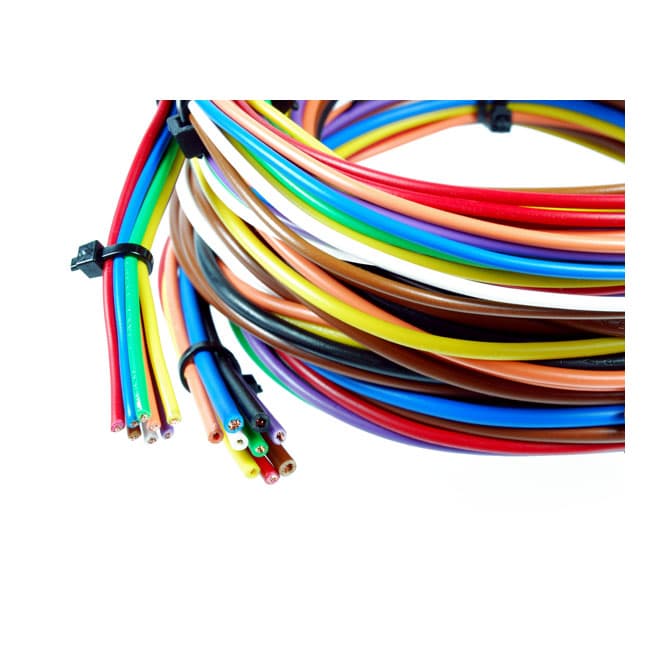
The Motogadget m-Unit is the game-changer here. This electronic control unit lets you completely rewire your K100 or K75. LED lighting, electronic instruments, a clean wiring harness without all those original cables. It works equally well with both engines.
For your custom build, this is actually essential. The original wiring on these bikes is a nightmare. With the Motogadget m-Unit you can keep everything clean, make repairs easier, and modernize without it feeling like a frankenstein.
The difference between K100 and K75 here? Practically speaking: none. Both benefit enormously from this upgrade.
Parts Availability
Don't underestimate this. If you're halfway through your project and realize you need more parts, you don't want to discover problems then.
The K100 was more popular, so there are more original replacement parts available. But—and this is important—both bikes have a strong community. Thanks to classic enthusiasts, there are specialized suppliers making parts specifically for the K-series.
For your custom build, where you'll be replacing a lot anyway, this matters less. You'll be going aftermarket anyway. And both are equal there.
Suspension and Handling
This is the moment a café racer builder really pays attention.
Both bikes originally have fairly soft suspension. The K100 feels lighter, the K75 more direct. For your custom build you'll probably want to change this.
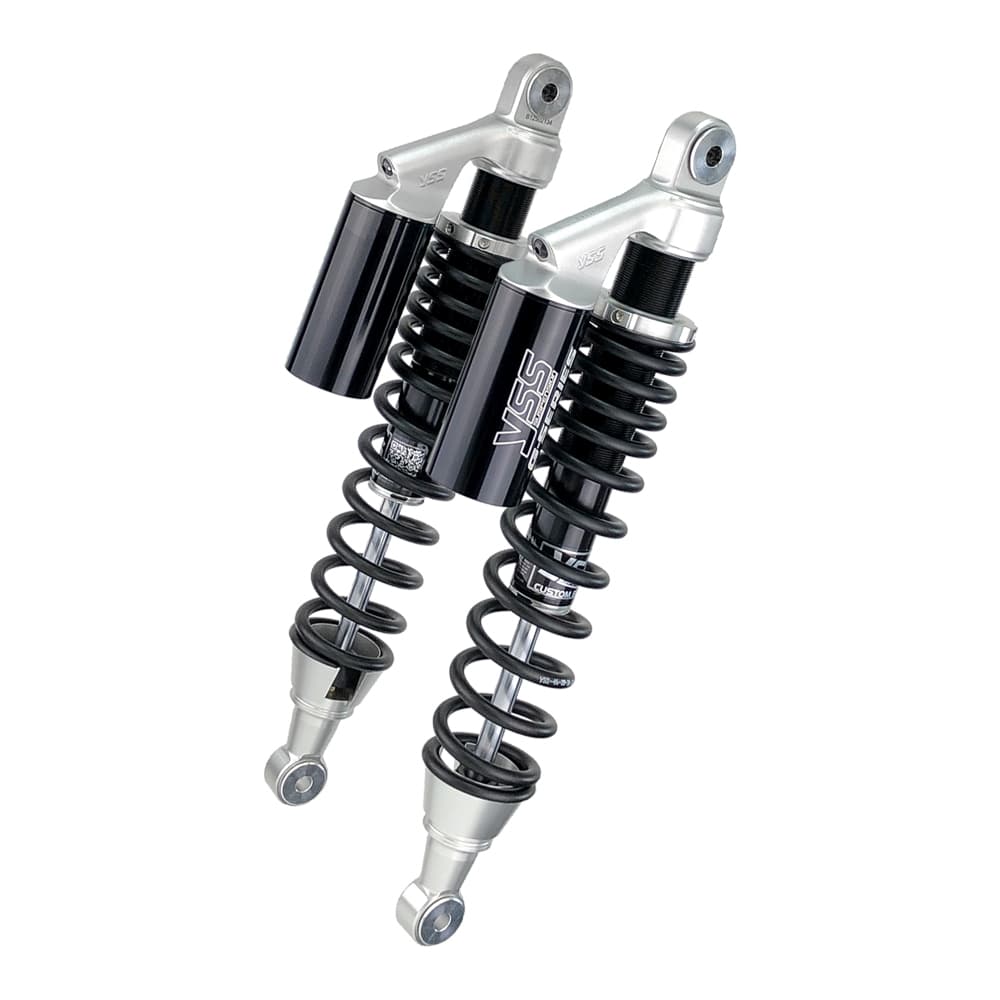
YSS K-series shock absorbers are your best friend here. These shocks are specially made for K100 and K75 and give you total control over your setup. They're adjustable and available in different spring rates. This means you don't just improve how your bike functions, but you can tailor it to your riding style.
The difference between both bikes: the K75 benefits slightly more from better shocks because the original suspension is already somewhat stiffer. With good shocks, a K75 feels almost supernaturally nimble. The K100 becomes more of an all-rounder with the same upgrades—still smooth, but now with precision.
If you want an agile café racer, the K75 gets you there faster with good shocks. If you want something that's good at everything, the K100 is your friend.
The Engine Type: Four Against Three
You simply have to like the engine type.
A four-cylinder is smooth. Incredibly smooth, actually. The K100 barely roars—it's more of a soft rumble. Many riders find this pure and elegant.
A three-cylinder has a characteristic sound. The K75 has a three-cylinder rhythm you feel in your entire body. For many classic motorcycle enthusiasts, this is real motorcycling. The engine block feels like something with personality.
For your custom build: this isn't rational, but it is important. How many hours will you spend on this engine? What drives you? The refinement of the four-cylinder or the character of the three-cylinder?
Both are justified. But you need to be honest with yourself.
Café Racer Potential: Where's Your Vision Heading?
Let's say you're sitting here with your first real custom build. You've been looking at Pinterest photos. You've been in our shop and looked at classic café racers.
The K75 naturally feels like a café racer engine. The more compact frame, the three-cylinder sound, that agile character—it feels like it's already halfway there. You just need to pare it down.
The K100 is more of a blank canvas. You can make it into a beautiful café racer too, but you need to be more intentional about the transformation. The longer wheelbase works against you, so you'll need extra creativity with your design.
Both can do it, but the K75 feels more logical if your end result is a café racer.
Budget and Project Costs
In other words: where is your money going?
K100 engines are usually more expensive to buy than K75s. You pay for that extra power and slightly more luxurious equipment. But for your custom build, this doesn't pay off. You'll replace everything anyway.
K75s are often more affordable to start with. This gives you budget to save for real upgrades: quality shocks, a decent brake set, modern electronic control.
For your project: if your budget is tight, the K75 will take you further. You'll have more money left for quality components that actually make a difference.
My Honest Advice: BMW K100 vs K75 Custom Build Decision
After all this analysis, what's the answer?
Choose the K75 if:
- You want to build an agile, nimble café racer
- You love the three-cylinder sound
- Your budget is tighter
- This is your first custom build and you want to learn
- You want something that feels like a real classic race machine
Choose the K100 if:
- You want more power and will also use it for long rides
- You like smooth, rounded engines
- You have the budget for the project and want an all-rounder
- You want something more elegant without the race aggression
- You already have a K75 and this is your second project
What many people don't realize: there's no wrong choice here. Both make beautiful custom bikes. It comes down to what matches your style and preferences.
The Practical Steps: How to Get Started
Okay, you've chosen. Now what?
Find a solid base. Both K100 and K75 are old now. Find something that runs, not something you have to build from zero. A motorcycle that starts is always the starting point.
Think about your end result. Make sketches, gather inspiration, know what you want. This determines everything that follows.
Invest in quality shocks. The YSS K-series shock absorbers are honestly the smartest money you can spend. This immediately gives you feedback on whether you're on the right track.
Modernize your electronics. The Motogadget m-Unit is practically not optional. This makes your project clean and professional.
Work step by step. Don't do everything at once. Small steps, lots of learning.
In Conclusion
The BMW K100 vs K75 custom build comparison looks more complicated than it is. Both are solid engines that have served faithfully for years and will continue to do so. Both can be transformed into beautiful customs.
It comes down to this: what does your gut tell you? Are you classic and refined, or are you motorcycling at your core? Do you want something fast and nimble, or something that can do it all?
With quality upgrades—YSS shocks, Motogadget electronics, quality components—you can build a motorcycle with both that you're proud of.
Come visit us in our shop in Haarlem. We've had both bikes, built both, ridden both. We'll help you make the right choice for your project.
Products from this article
Frequently asked questions
What is the difference between BMW K100 and K75 engine?+
The K100 features a 987cc four-cylinder boxer engine with around 90 hp, while the K75 has a 740cc three-cylinder boxer motor with approximately 75 hp. The K100 offers more power and torque, ideal for faster custom builds. The K75 is lighter and more compact, beneficial for café racer builds.
Which BMW is lighter: K100 or K75?+
The K75 is the lighter option at around 210 kg, while the K100 weighs approximately 240 kg. This 30 kg difference is noticeable in daily use, especially during braking and maneuvers. For café racer builds where weight is crucial, the K75 gives you an advantage.
Are BMW K100 and K75 parts interchangeable?+
Partially. Many parts are shared, such as chassis, brakes and electrics, which is beneficial for custom builds. However, engine-specific parts differ, so check carefully with upgrades. For lighting like Kellermann and Motogadget, or YSS suspension, both machines fit perfectly.
Which BMW is better for a café racer build?+
The K75 is traditionally the preferred choice for café racers due to its lower weight and more compact form factor. The sleek design lends itself better to minimalist setups. But the K100 can also be fantastic, especially if you want more character and power. With the right Hagon suspension and retro helmets from DMD or Bell, you can make either one a beauty.